Station 7 Animals

Animals in ancient Mesoamerica: a link between people and the divine

Press the right arrow to begin.

Meet the real animals on the table

COUGAR

Stands in for the jaguar.

The jaguar was a powerful predator linked to royalty, strength, and the underworld by the Olmec, Maya, and Aztec. Ancient artists carved it everywhere.

RABBIT

The rabbit in the moon.

Where some people see a face in the full moon, ancient Mesoamericans saw a rabbit. The Maya moon goddess is often shown holding one, and Rabbit is one of the 20 day signs in the Aztec calendar.

Three more animals, the serpent, the dog, and the eagle, aren't on the table. You'll meet them in the ancient objects.

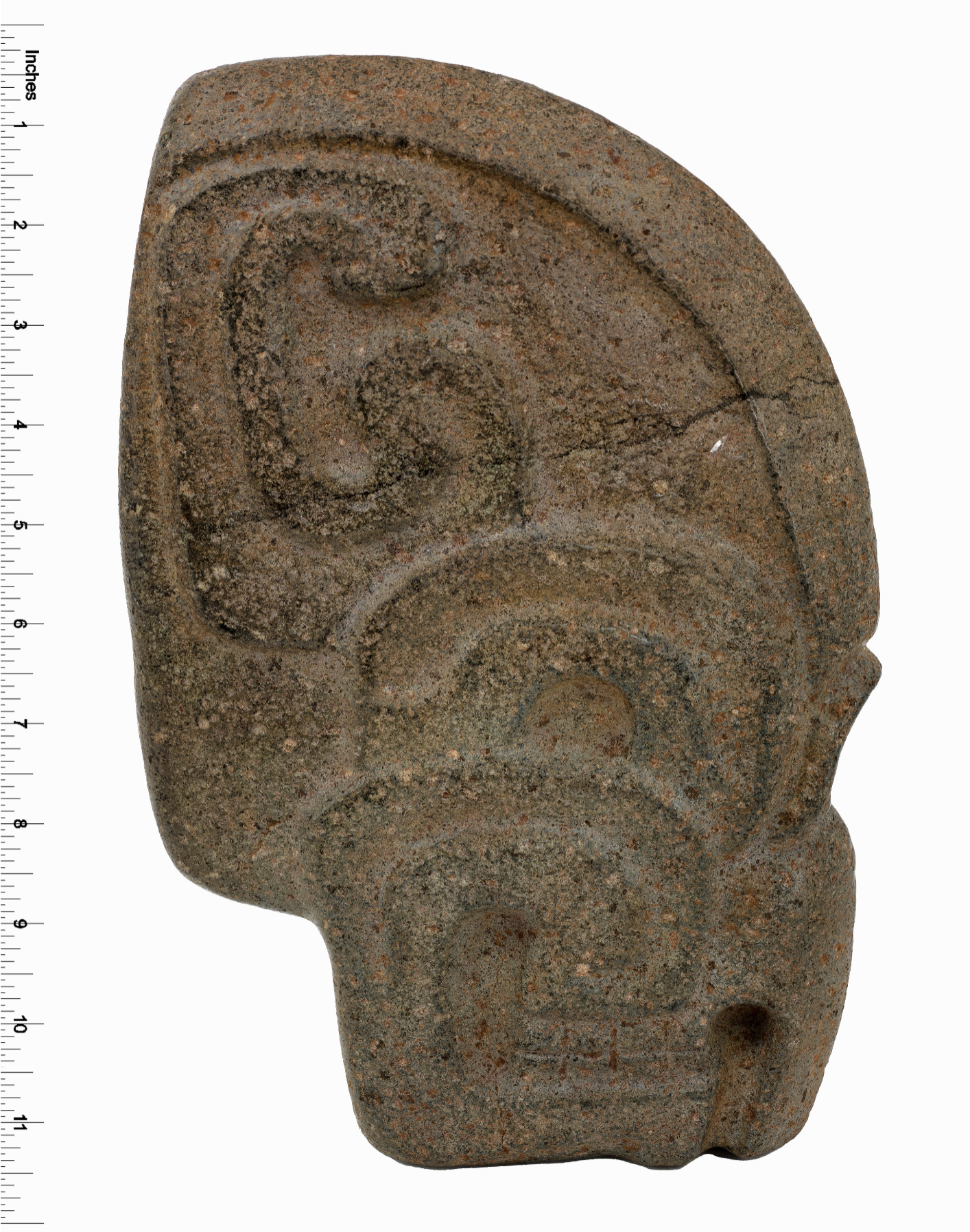
A carved stone hacha from the Maya, shown from the front. Its shapes can look like a skull, a bird of prey, or a jaguar.
Photo: MAW Collection, CSULA Special Collections and Archives, record MawM0145.
Artifact 1

What do you see in this carved stone? A bird? A jaguar? A skull? Try turning your head sideways.

All three!

This carved stone is called a hacha. Depending on how you look at it, it shows a skull, a bird of prey, and a jaguar. Together they stand for the three realms of the Maya world: death and the underworld, life and the land of the living, and the heavens of the ancestors and gods.

Maya, Guatemala, about 550 to 900 CE. Archaeologists believe this type marked a ballcourt.
A carved stone hacha from the Maya with a serpent hidden in its shapes, shown from the front.
Photo: MAW Collection, CSULA Special Collections and Archives, record MawM0146.
Artifact 2

There is a snake hiding in this stone. Can you find the head? Where is the mouth?

A descending serpent

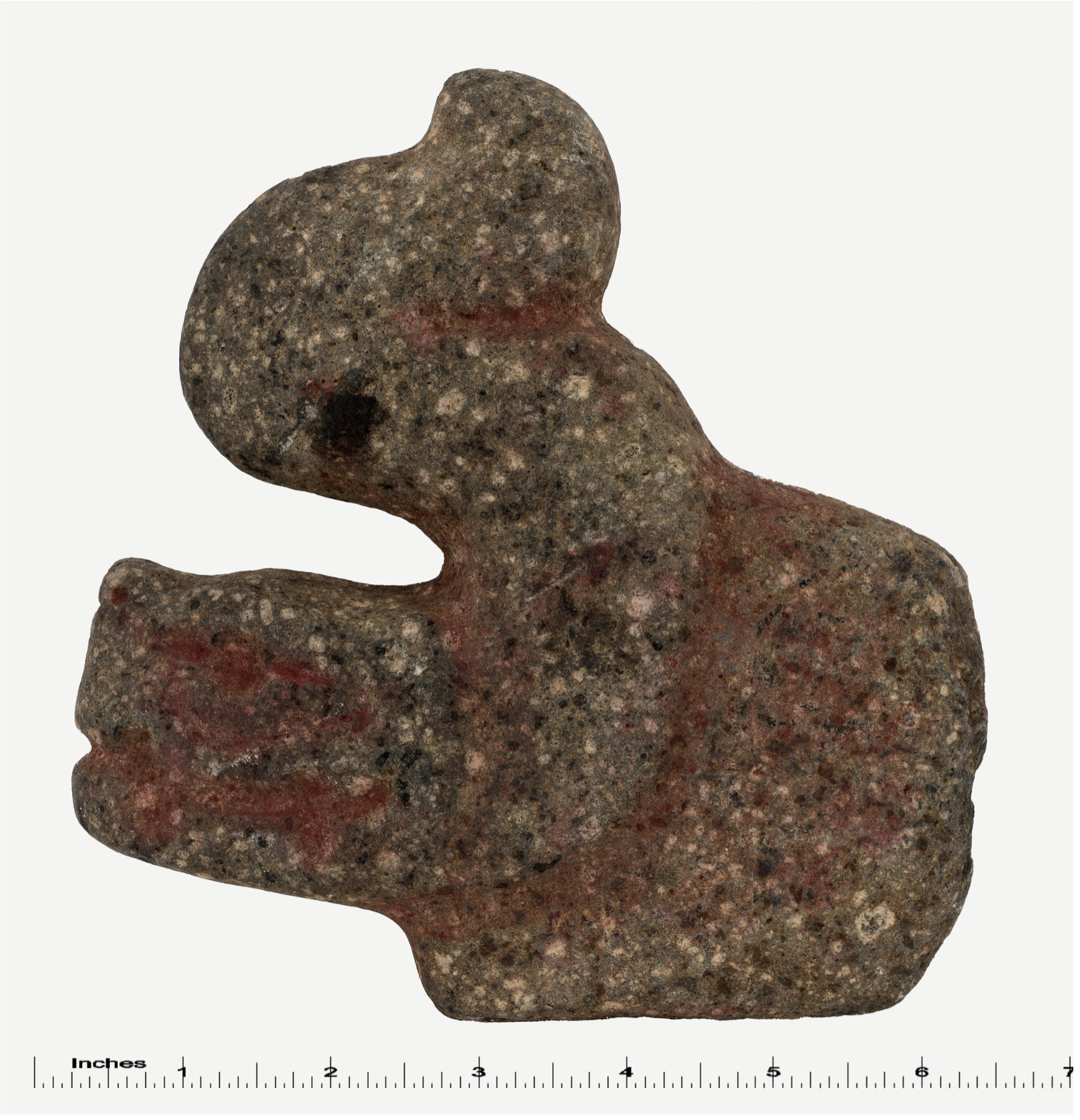
People in ancient Mesoamerica saw the serpent as a magical animal, because it can renew itself by shedding its skin. It lived among the living, but it could also enter the earth, the realm of the dead. The serpent stands for rebirth, regeneration, and transformation. This kind of hacha was probably attached to a yoke to deflect the rubber ball in the ballgame.

Maya, Guatemala, about 600 to 900 CE. About 7 inches tall.

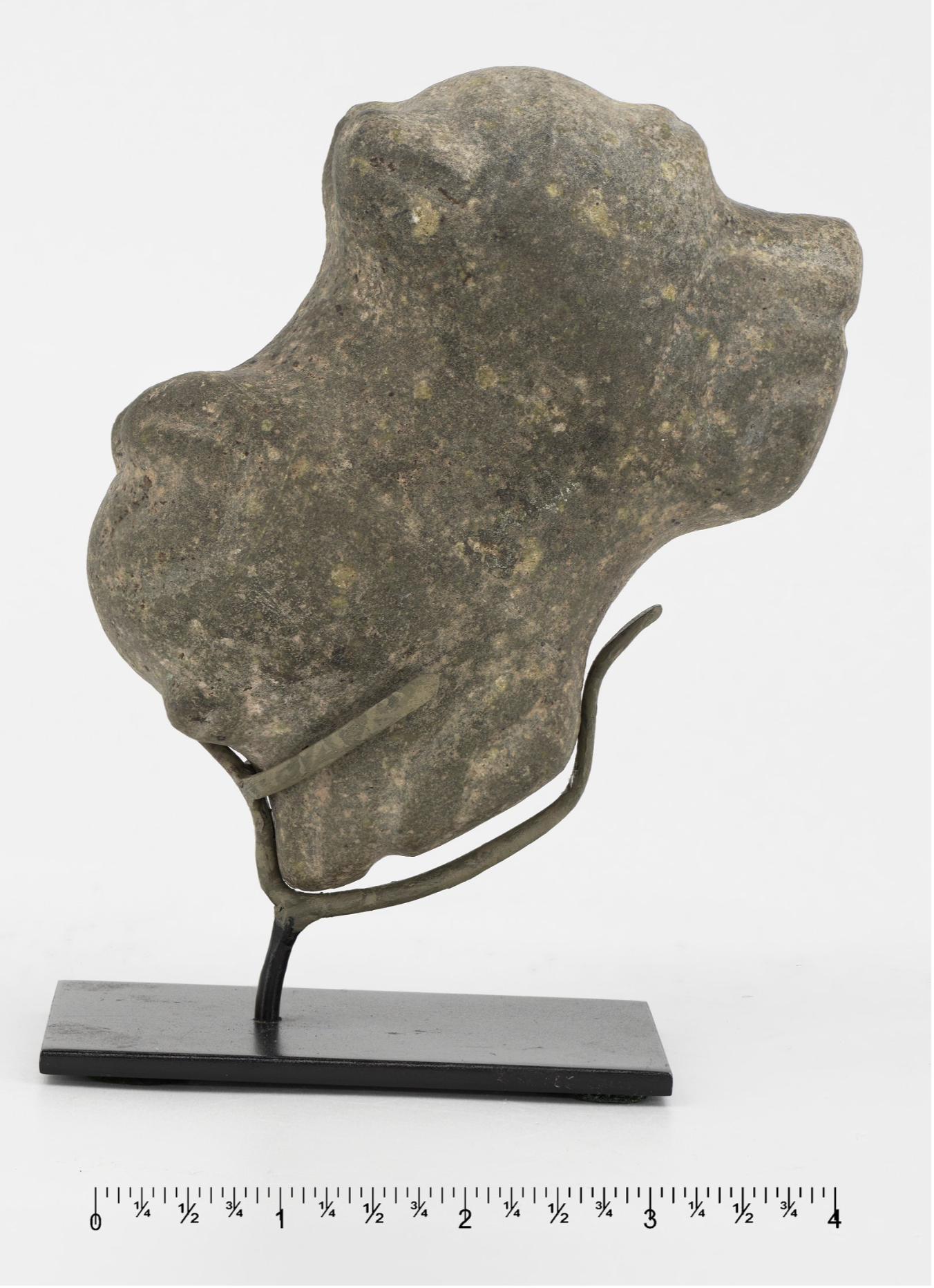
A carved stone animal head with a snout pointing to the right, the head of a macehead from Colima, Mexico.
Photo: MAW Collection, CSULA Special Collections and Archives, record MawM0194.
Artifact 3

What animal is this carved stone head? Hint: look at the snout, pointing to the right.

A dog

This is the head of a macehead, a ceremonial weapon that was a symbol of power. The dog could stand for food, companionship, and warmth, or for a guide to the underworld. The underside has two horned frogs, which stand for renewal, change, and transformation.

Shaft Tomb culture, Colima, Mexico, about 2,000 years old. Only 3 inches high.

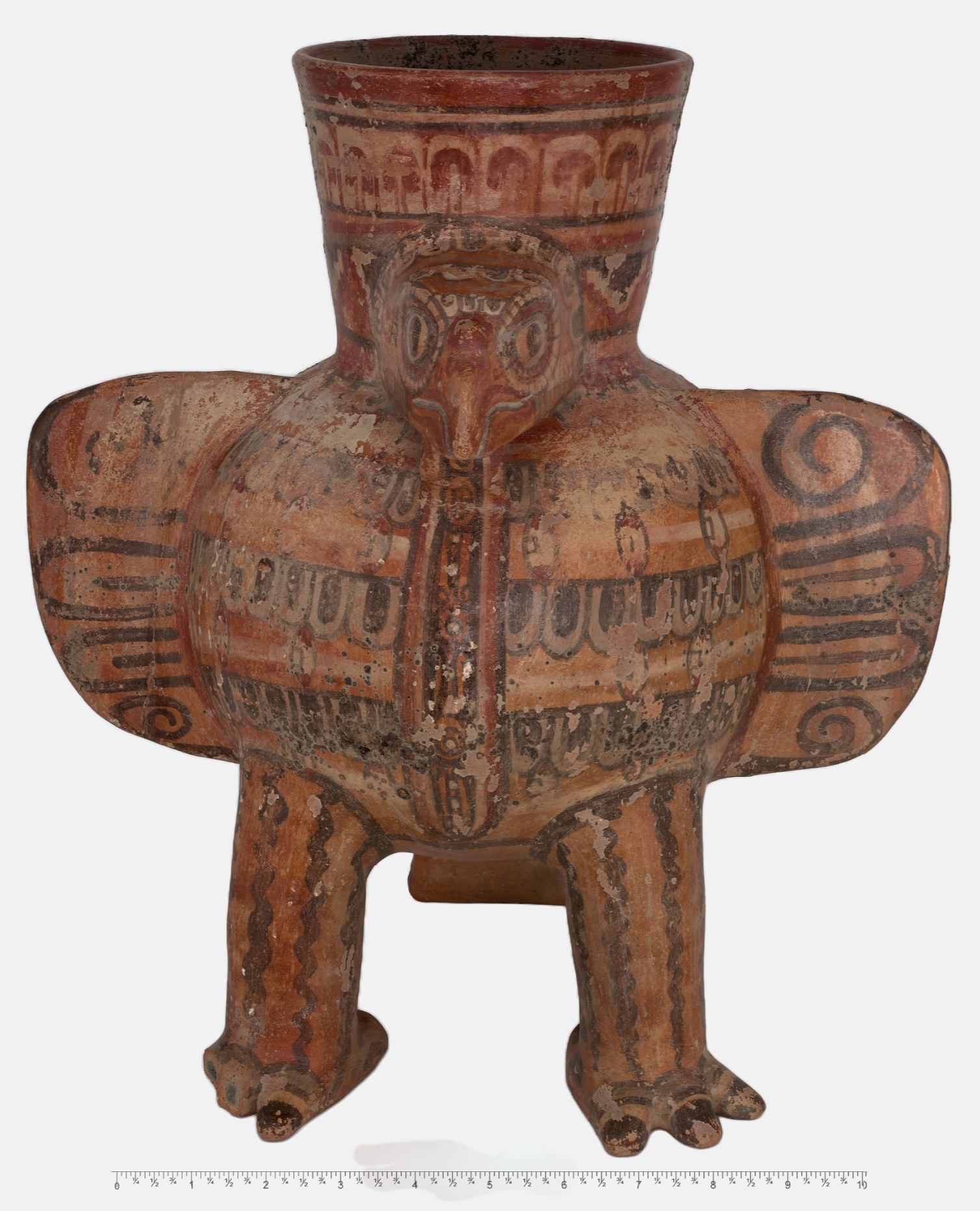
Front view of a clay pot shaped like an eagle, with rows of feathers and a tail.
Photo: MAW Collection, CSULA Special Collections and Archives, record MawM0100.
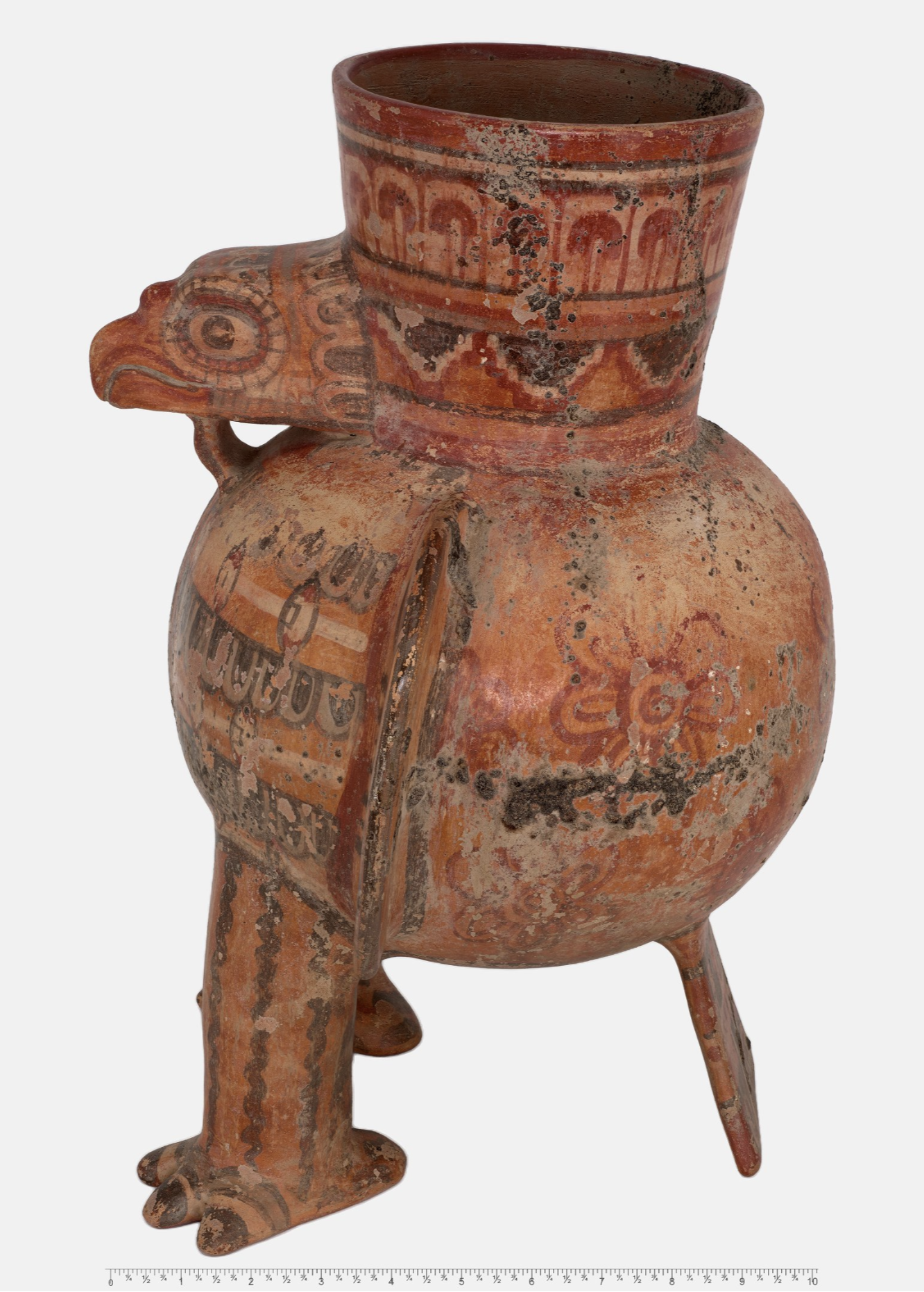
Side view of the same clay eagle pot, showing the bird's legs and flat tail.
Side view.
Artifact 4

How many legs does this bird seem to have?

A harpy eagle

The harpy eagle is the largest bird of prey in Mexico and Central America. It is powerful and fast enough to fly through the jungle canopy and catch a monkey! People admired that power. This pot is an eagle effigy vessel, shaped like the bird. It stands on two legs and a flat tail.

Eastern Nahua, Cholula, Mexico, about 1250 to 1521 CE. Almost 12 inches tall.

Why animals mattered

Animals were not just part of nature. They were a link between people and the divine.